
Sound of Urban Environment: Today & Future
Interactive AR installation exploring urban futures through speculative soundscapes
Collaborated with Wei-Jun LinSupervised by Laura Mchugh
Paper | Video
We rarely pause, listen, and think of the soundscapes in our city, but they carries information about activity, culture, atmosphere, and time. These are continuously shaped by technological, social, and environmental changes, and thus are a refection of the transformation of our urban environment. So, can sound serve as a medium for reflecting on and imagining urban futures? By making sound the primary medium for speculation, we hoped to create space for reflection in that invites interpretation rather than prescribing meaning. This project used design fiction methodologies and spatial audio in AR to create an immersive experience inviting audiences to listen to and question how cities might evolve.
Design Process
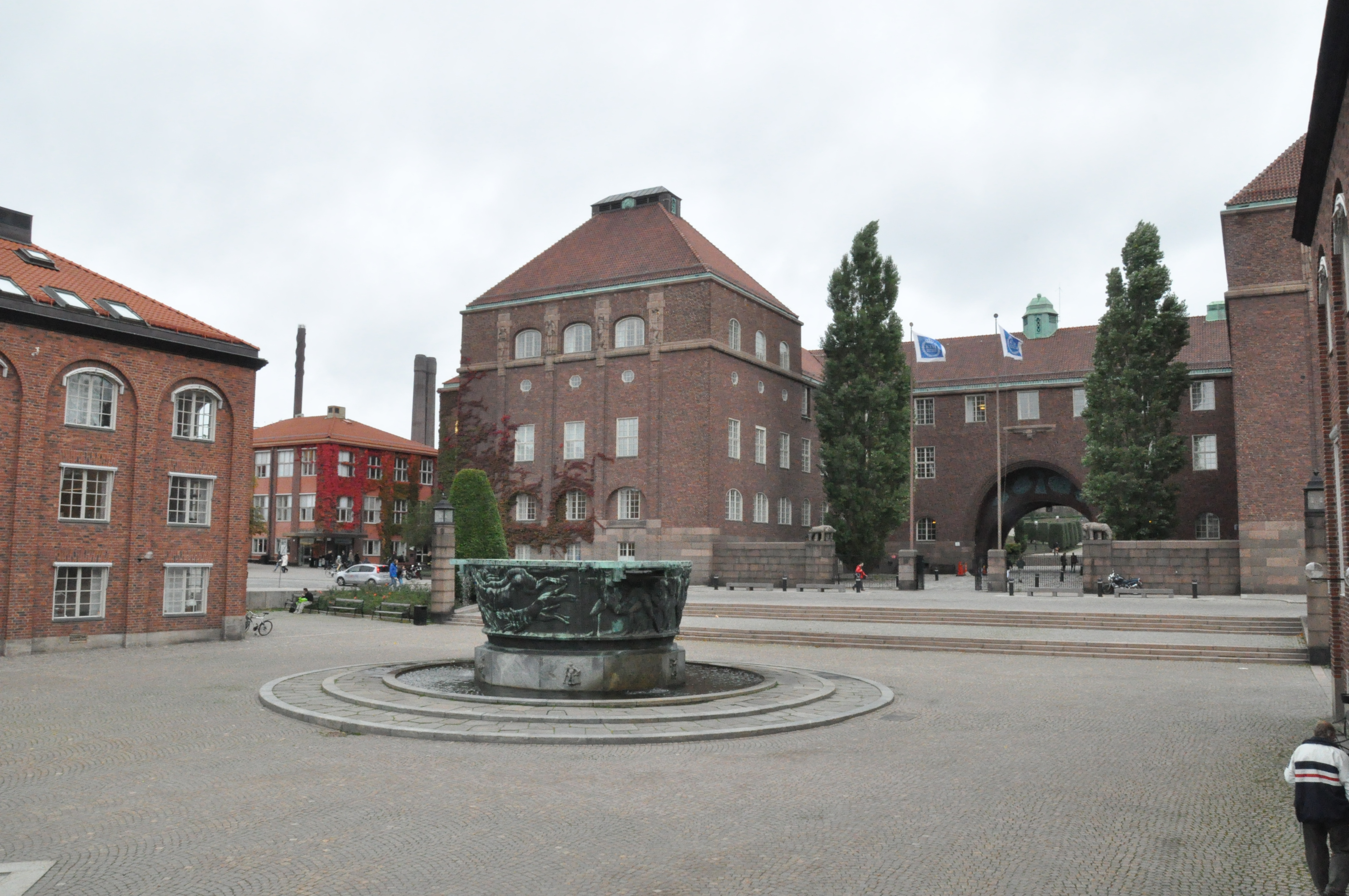
We used the KTH open-air square in Stockholm as our focus, where we explore how to pair up soundscapes
that are/will be present in the years 2025 and 2040.
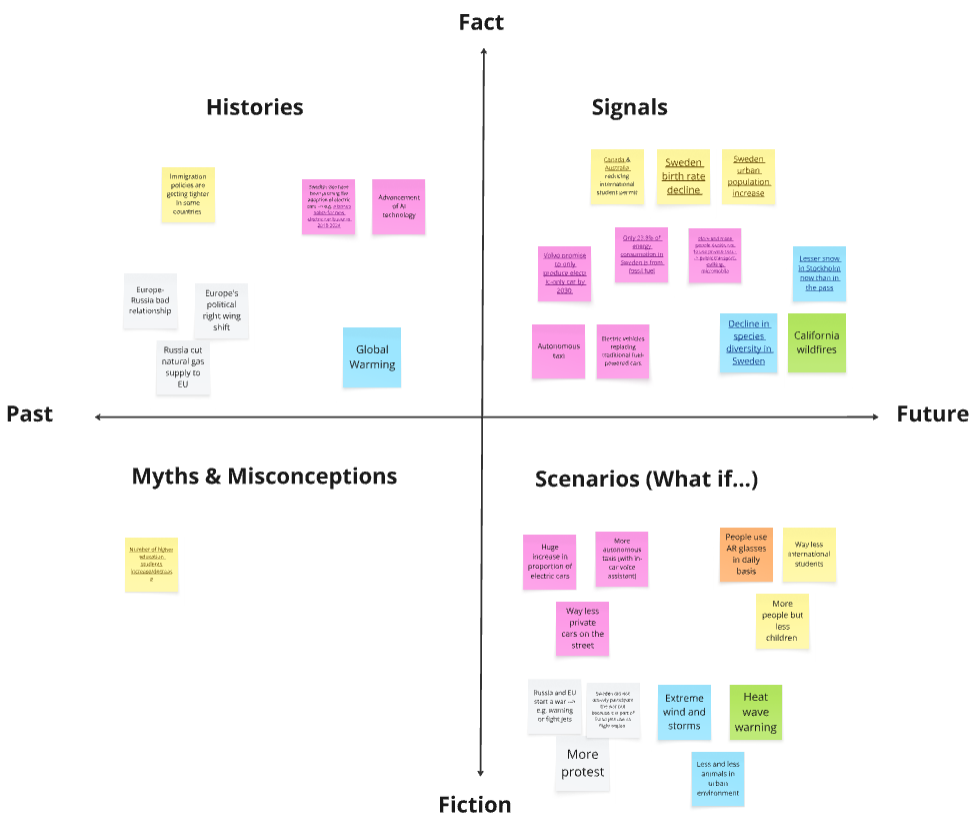
We use design fiction as our starting point of our design. The process began with mapping current
phenomena (e.g. global
warming, EU-Russia tensions, AI advancement) onto a design fiction matrix to ground speculation on real
trends while
identifying potential future events like declining biodiversity, electric vehicle adoption, stricter
immigration
policies, and international conflicts.
We also created "what if" scenarios to imagine how these forces might reshape urban sound: What if global
warming
continues? What if self-driving cars become reliable? What if society becomes more conservative? These
questions guided
the soundscape composition.
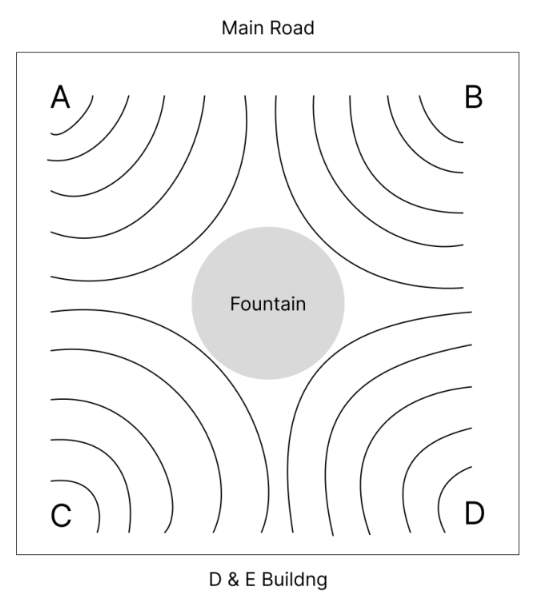
The present soundscapes used real recordings from four corners of the square at different times and days,
layered with
additional sounds to emphasize aspects we wanted to contrast with the future. Future soundscapes with our
speculated
changes, such as less birdsong due to species decline, electric vehicles replacing oil cars, war alerts, and
more.
The soundscapes were structured in three layers (human, mechanical, natural) based on how urban sounds are
categorized,
with each corner emphasizing different layers based on its location and characteristics.
Implementation
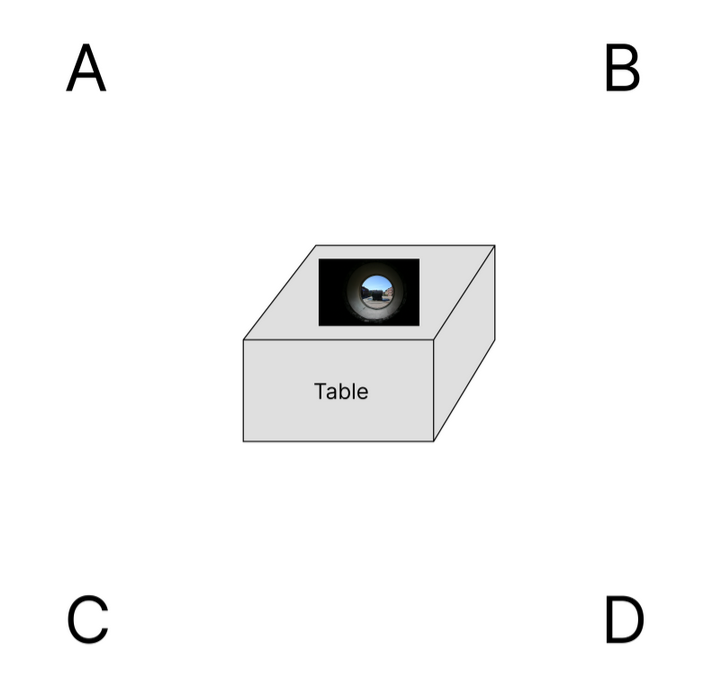
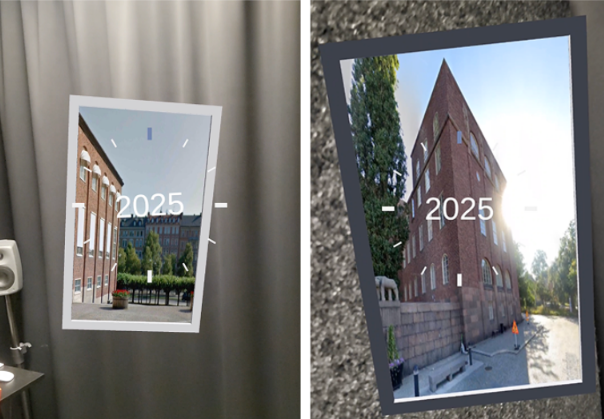
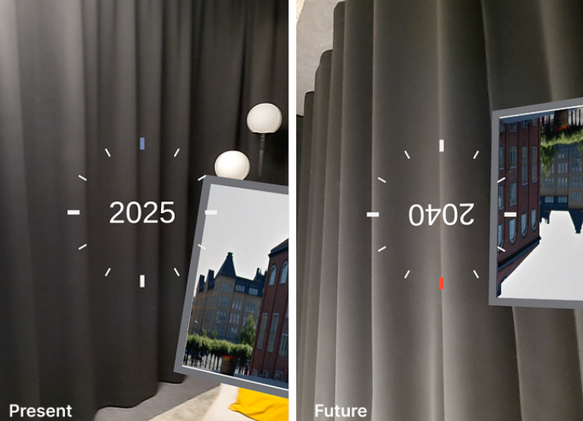
When the AR application detects the image anchor, four virtual "windows" will appear. Each window
displayed a photo of
one of the corners of the square, acting as a portal to that corner's soundscape. As visitors moved
through the physical
space, sound sources shifted spatially and volumetrically based on their position, creating an embodied
experience where
physical movement shaped what they heard.
Responses
We asked participant to sketch how they see the future of urban space after experiencing this
installation. The
responses were pretty divergent. Some participants sketched dystopian futures with war, extreme weather,
technological
surveillance, separation from loved ones, and expressed they feel stress and pessimistic for the future.
Others imagined
hopeful, greener futures with more natural sounds and wrote about feeling hopeful.
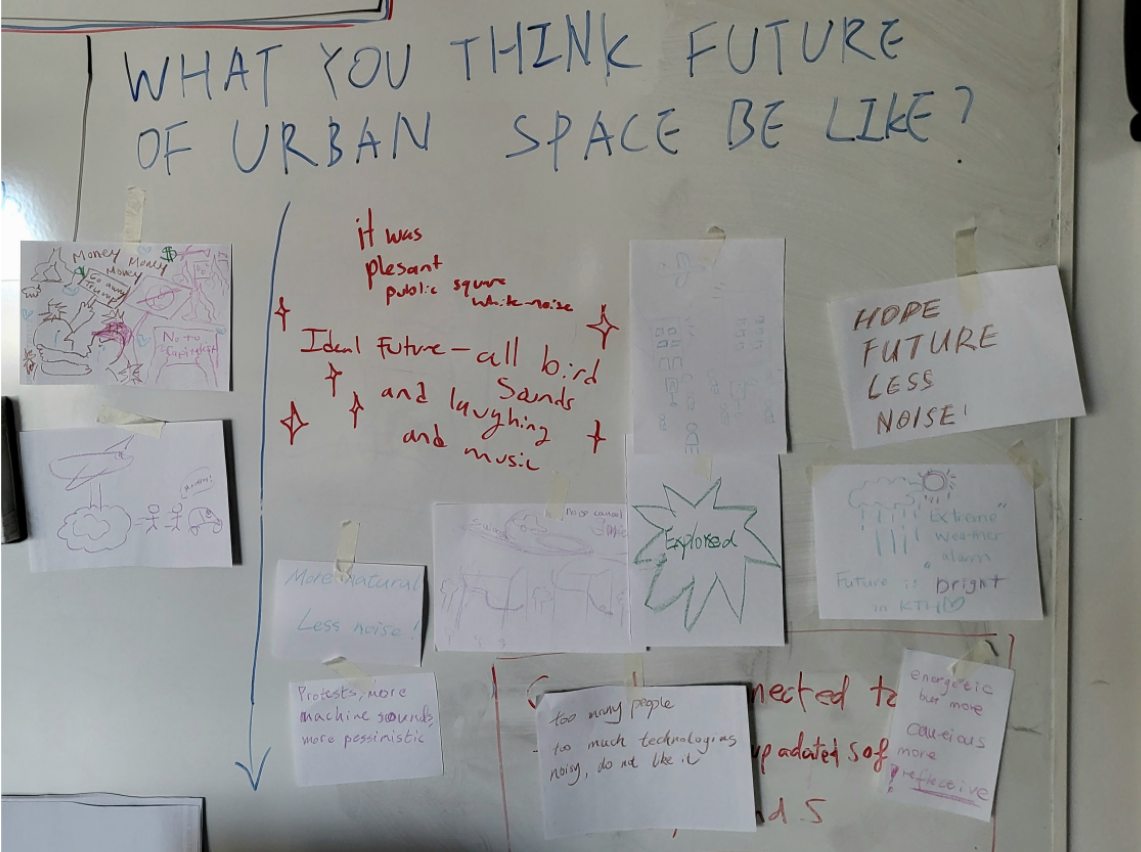
Even though our own speculation is a bit more leaning on the pessimistic side, this shows how the
installation sparks
different imaginations of the future that are outside of the creator (us) perspective, showing that sound
can be a
speculative medium that leaves room for personal interpretation and critical imagination.