
Ecology of Care in Museum
Designing for care and connection between visitors and cultural artifacts
Collaborated with Kristin Eriksson, Louisa Helen Hirvonen, Amina-Kamra MaglićSupervised by Arjun Menon
Workbook | Video Prototype
How can we design museum experiences that foster emotional and ethical connections between visitors and artifacts, rather than just passive observation? Traditional museum experiences often position visitors as observers and artifacts as objects inside the glass walls. Working with the concept of interdependence, this project focus on how visitors and artifacts mutually shape each other through encounter and attention to explored how museum interactions could embody an "ecology of care".
Design Process
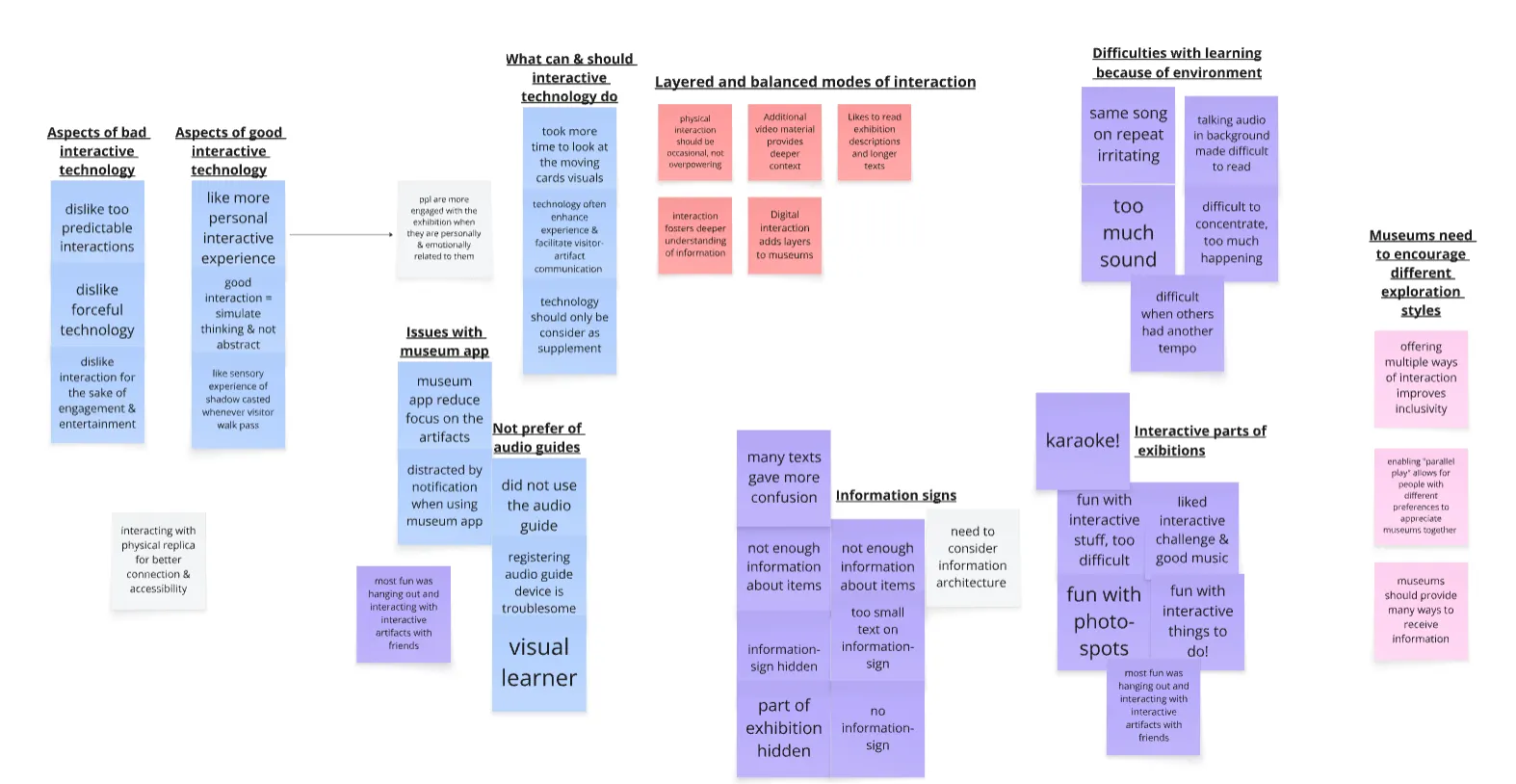
We followed the Double Diamond process, beginning with understanding the problem space. First handed
were collected
through interviews and museum diaries, where we coded, clustered, and ranked the themes to discover that
visitors had
diverse exploration styles and wanted more personal, meaningful engagement with artifacts. We also
conducted a
literature review on cultural user experience and learning to ground our understanding of how people
interact and form
connections in museum contexts.
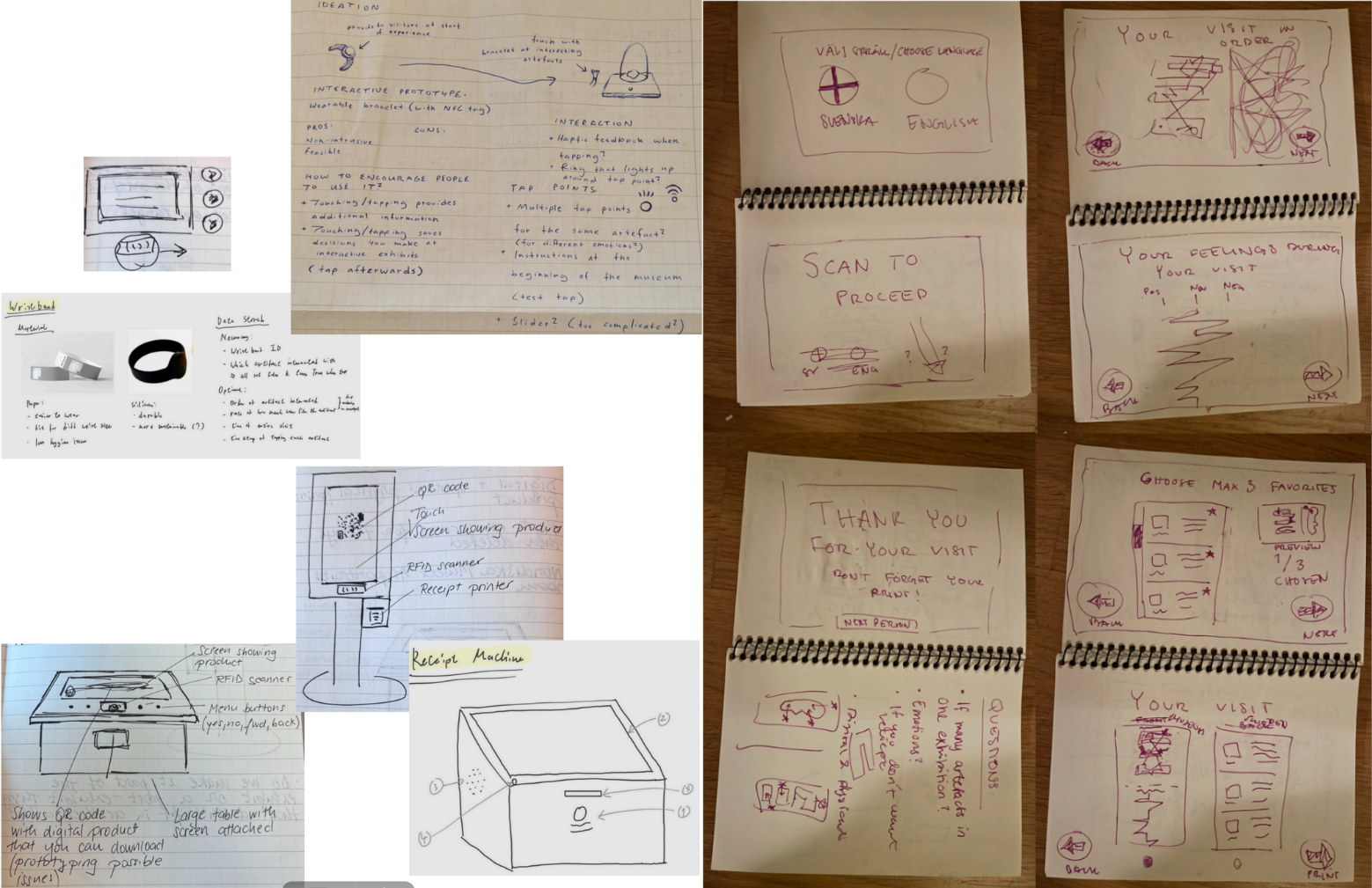
During ideation and development phase, we explored various approaches through drawing different sketches,
where we finalized on a system that can summarize the users' visit while allowing them to engage with
artifacts
they engage with.
Design Concept
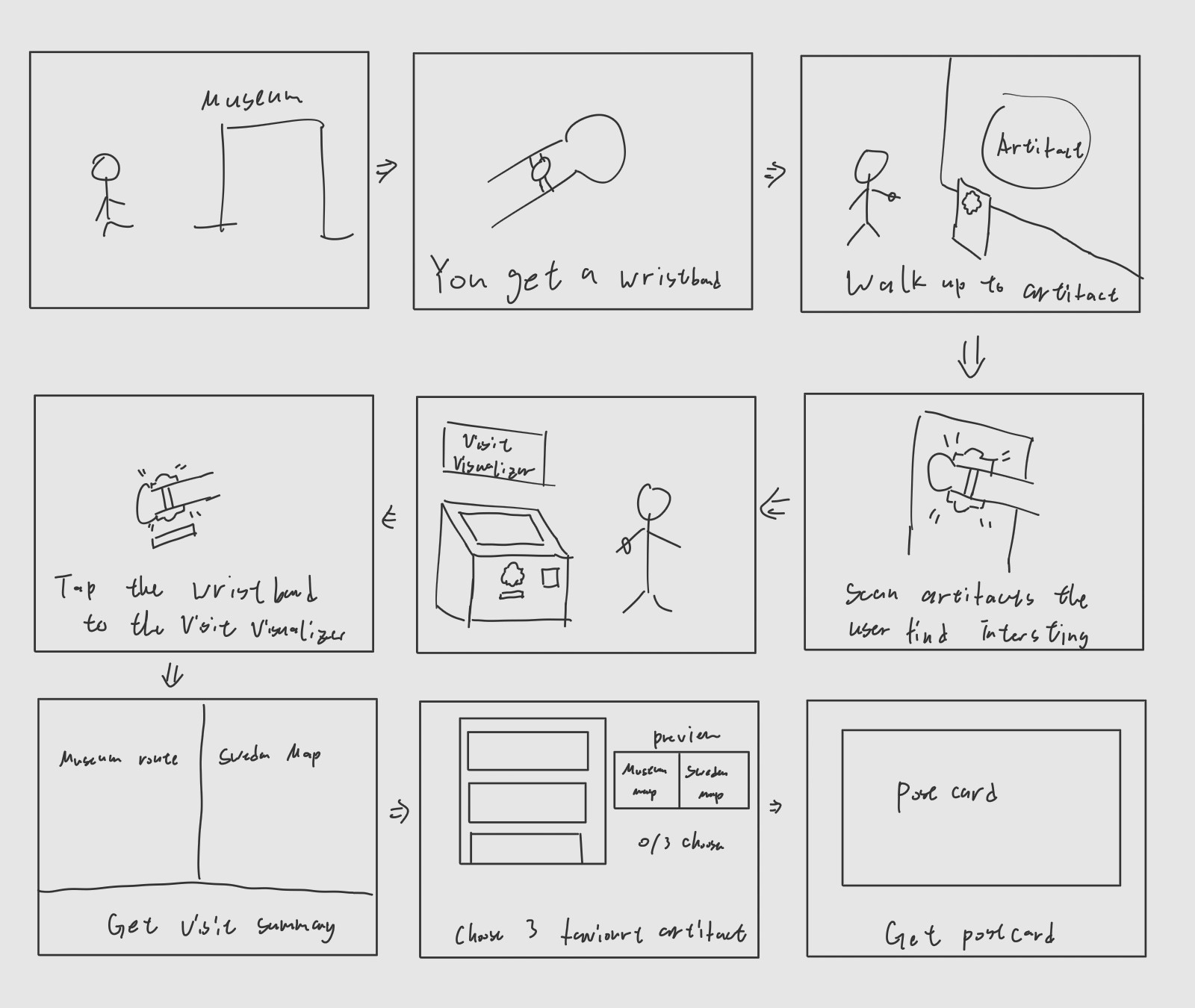
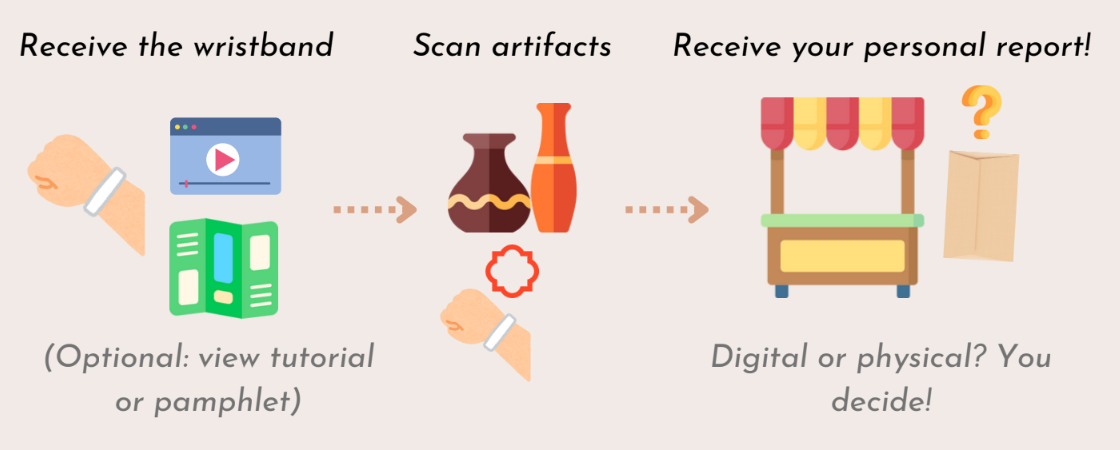
The final design is a system where visitors could use a wristband to scan artifacts they find interesting throughout their visit. At the end, a Visit Visualizer machine would generate a post-card like physical personalized report highlighting the origins and ethical dimensions of their selected artifacts, creating a moment of reflection on what drew their attention and the ethical implications those artifact might involve.
Prototypeing & User Testing
We made a prototype of the touchscreen interface of the Visit Visualizer station and conducted user
testing
with prototype of the wristband and scanner in a mock up museum. There are also mock up of the physical
personalized
report and instruction pamphlet. Additional to the mockup prototype, we also created a video prototype
to illustrate the user experience of the system in a museum context.
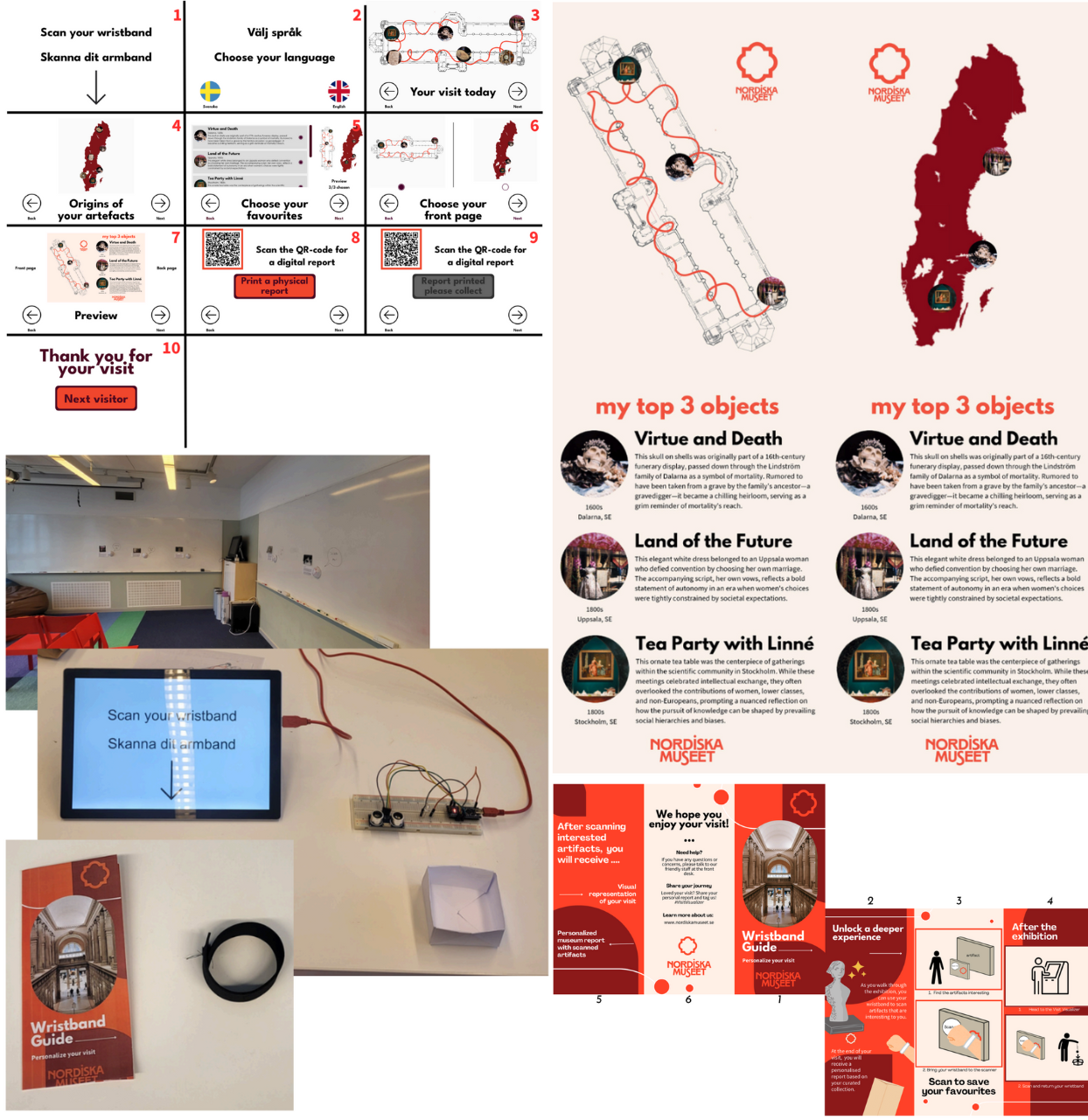
We conducted user testing with Wizard of Oz method and the mockup prototype. The results shows that having a
tangible report created a bridge between the museum experience and visitors' ongoing
thinking and make the connections and questions they had formed about ethical responsibilities toward the
artifacts and
cultures visible.